
ICH Climatic Zones for Stability Testing
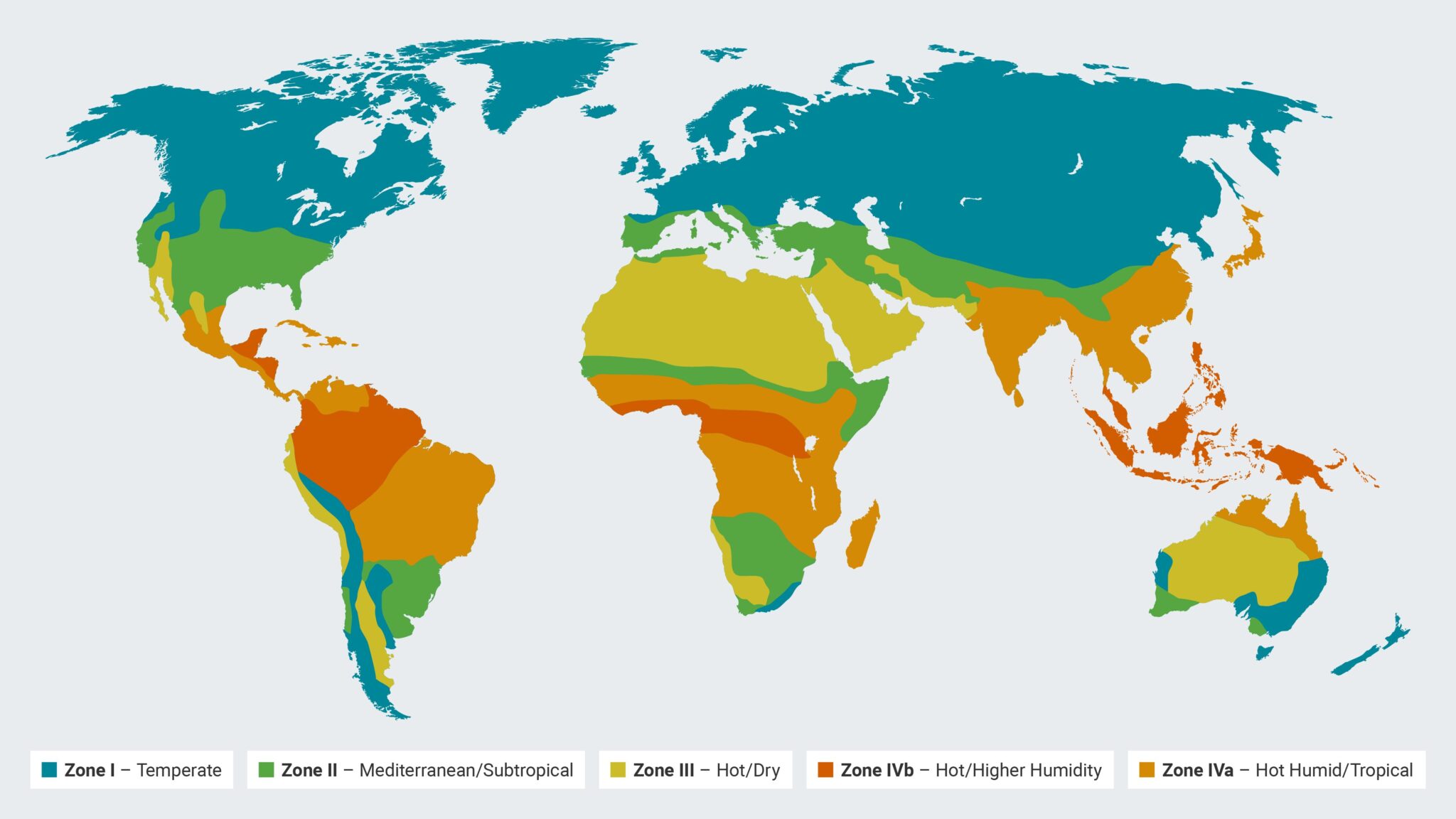
What Is An ICH Climatic Zone?
An ICH Climatic Zone refers to a classification system established by the International Council for Harmonisation of Technical Requirements for Pharmaceuticals for Human Use (ICH). This system categorises different parts of the world into specific zones based on their prevailing climatic conditions.
The classification of a climatic zone is determined primarily by two key environmental factors: temperature and humidity. These factors are critical in understanding how pharmaceutical products react over time in different geographic locations.
This categorisation aids in developing global standards for drug safety and efficacy, facilitating the harmonisation of pharmaceutical regulations across different countries.
What Are The 4 Types Of ICH Stability Zones?
The International Council for Harmonisation (ICH) has established four distinct stability zones to guide pharmaceutical stability storage and testing of products.
These zones represent different climatic conditions worldwide to ensure that pharmaceutical companies test products under environmental conditions similar to where they will be stored and used.
Each zone has specific temperature and humidity conditions that simulate the climatic environment of various geographic regions.
Learn more about the four ICH stability zones below:
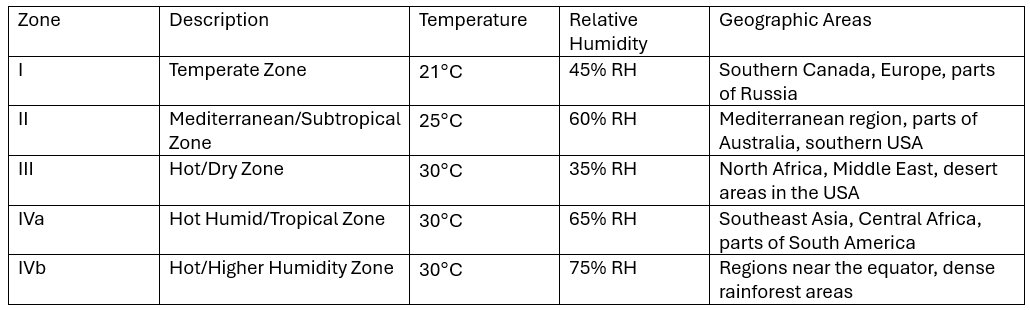
Zone I: Temperate Zone
The Temperate Zone, designated as Zone I by the International Council for Harmonisation (ICH), contains regions with a mild and moderate climate.
Characteristically, these areas experience four distinct seasons, with relatively mild winters and summers. For pharmaceutical stability testing, the typical environmental conditions of this zone are at 21°C with 45% relative humidity (RH).
Geographically, this zone includes much of Southern Canada, most of Europe, and parts of Russia, characterised by their temperate maritime and continental climates.
Zone II: Mediterranean/Subtropical Zone
Zone II, known as the Mediterranean or Subtropical Zone, refers to areas where the climate is generally warmer than the Temperate Zone. It features hot, dry summers and cool, wet winters.
Standard conditions for stability testing in this zone are 25°C with 60% RH. Zone II covers areas like the Mediterranean region, parts of Australia, and the southern coastal regions of the USA, where the climate is significantly influenced by warm ocean currents.
Zone III: Hot/Dry Zone
Zone III experiences high temperatures and low humidity, typical of desert and semi-arid regions. For stability testing, the conditions are set at 30°C with 35% RH, reflecting the challenging dry and hot environment.
Geographically, this includes large parts of North Africa, the Middle East, and desert areas in the United States like Arizona and Nevada, where the climate is predominantly arid.
Zone IVa: Hot Humid/Tropical Zone
Zone IVa is characterised by consistently high temperatures and significant humidity throughout the year. The standard testing conditions for pharmaceutical products in this zone are 30°C with 65% RH.
This zone includes regions like Southeast Asia, Central Africa, and parts of South America, where the climate is typically tropical with high rainfall and humidity levels.
Zone IVb: Hot/Higher Humidity Zone
Zone IVb, or the Hot/Higher Humidity Zone, represents areas with extreme humidity and high temperatures. It’s a subset of the tropical zone, with even more challenging environmental conditions for pharmaceutical stability.
The standard testing parameters here are 30°C with a higher humidity level of 75% RH. This zone is particularly relevant for regions close to the equator or areas with dense rainforests, like the Amazon Basin and Central Africa, where the climate is exceptionally humid and hot year-round.
What Are ICH Stability Conditions?
ACCELERATED AMBIENT
The Accelerated Ambient condition in ICH stability testing speeds up the rate of chemical degradation or physical change of a pharmaceutical product at a higher temperature than standard ambient conditions.
Typically, this test is conducted at 40°C with 75% relative humidity. Accelerated ambient testing assesses the short-term stability of a product and predicts its shelf life under normal storage conditions. This accelerated testing is crucial for identifying potential stability issues early in drug development.
ACCELERATED REFRIGERATED
Accelerated Refrigerated conditions test the stability of pharmaceutical products typically stored in cool environments. This testing is typically conducted at a temperature of 5°C, higher than standard refrigeration temperatures.
The purpose is to observe how slight elevations in temperature might affect products that require refrigeration, such as certain biologics, vaccines, or other temperature-sensitive medications.
ACCELERATED FROZEN
Accelerated Frozen conditions test pharmaceutical products that must remain within freezing temperatures at higher temperatures around -10°C to -20°C, compared to the standard storage temperatures of -20°C or lower.
This testing evaluates the stability of products like certain vaccines and biological materials, ensuring they remain stable and effective even when exposed to slightly higher temperatures than their frozen state.
INTERMEDIATE
Intermediate stability testing is a step between accelerated and long-term testing conditions. It usually involves storing the pharmaceutical product at 30°C with 65% relative humidity. This condition is helpful when accelerated testing shows significant change or if long-term testing data at 25°C are needed quickly.
It provides a balance, offering a more rigorous test than long-term conditions but less extreme than accelerated ambient testing. Intermediate testing helps in understanding how a drug might perform under conditions that are neither excessively harsh nor overly mild.
Astoriom Can Support Your ICH Storage Needs
Understanding ICH climatic zones is crucial for the pharmaceutical industry. These zones ensure that drugs are tested for stability under varied environmental conditions, mirroring the climates where they will be eventually used and stored. This rigorous testing is essential for maintaining the safety, efficacy, and quality of pharmaceutical products across the globe.
Astoriom provides specialised ICH stability storage solutions that cater to these diverse climatic requirements. Our state-of-the-art off-site facilities replicate the specific conditions of each ICH zone to guarantee accurate and compliant stability testing for your pharmaceutical products.
For reliable and precise stability storage services, get in touch for more information and Bionow member discounted rates.